
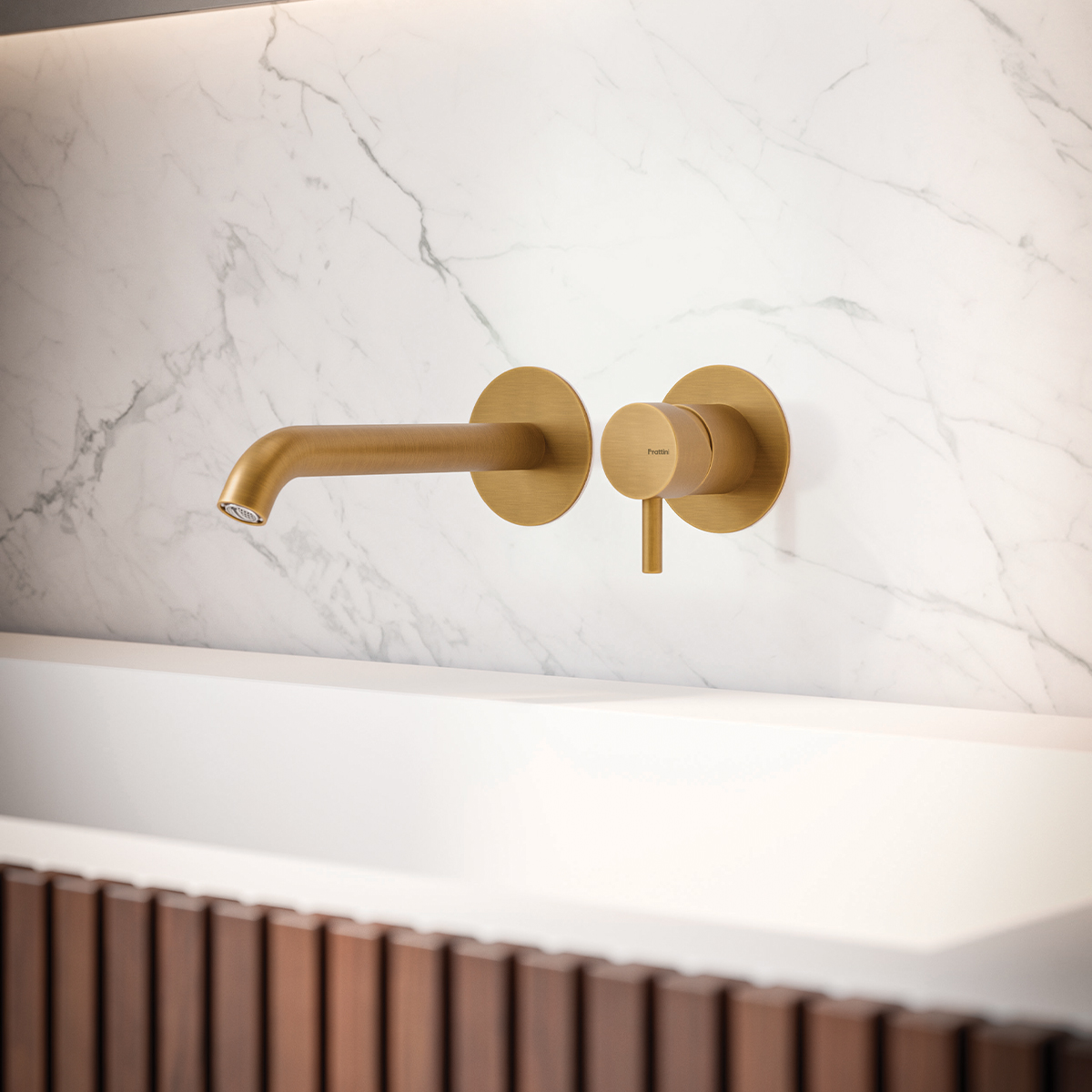
When designing a luxury vanity area, how your water is delivered is just as critical as the basin itself. The choice between wall-mounted and deck-mounted brassware is one of the earliest architectural decisions you must make during a bathroom renovation. This choice dictates your plumbing timelines, your wall construction, and ultimately, the daily visual flow of your space.
Deck-Mounted Brassware: The Timeless Showcase
Deck-mounted taps are anchored directly onto the porcelain ledge of the basin or into the countertop surface itself. This configuration is a classic favourite.
From a practical standpoint, deck-mounted installation is straightforward and highly accessible. Because the pipework runs straight up through the vanity unit or basin, it requires no structural alterations to your walls. This makes it an exceptional choice for straightforward retrofits or situations where disrupting premium wall configurations isn’t feasible. It keeps the hardware grounded and easy to access for any future maintenance.
Wall-Mounted Brassware: Floating Architectural Minimalism
Taking your brassware off the deck and mounting it directly into the wall instantly elevates a bathroom into a custom, architectural sanctuary. By hiding all visible pipework and connections behind the wall surface, you achieve a strikingly clean, floating aesthetic.
Beyond the undeniable visual appeal, wall-mounted configurations offer unmatched spatial and practical benefits. They clear the vanity deck entirely, removing the awkward nooks behind standard taps where water, soap residue, and limescale tend to collect. Cleaning the countertop becomes an effortless, single-wipe process. Additionally, because the spout extends out over the bowl from above, it opens up a wealth of design options allowing you to pair it beautifully with deep, sculptural sit-on countertop basins.
The First-Fix Reality: Understanding the ‘Rough Set’
While a floating wall tap looks beautifully effortless when finished, it requires careful, early planning during the ‘first-fix’ stage of your plumbing installation well before any plasterboard, tanking, or tiling takes place.
Unlike deck taps that simply drop into pre-drilled holes at the very end of the project, wall-mounted taps rely on an internal concealment mechanism, commonly known as a rough set or concealed box. This solid brass housing block must be perfectly levelled and securely plumbed into the wall studs ahead of time to handle the water mixing behind the scenes.
Because these internal components are highly product-specific, always look out for the “Related Products” on our product pages. This ensures you secure the correct, matching internal rough set alongside your visible decorative trim kit, keeping your project moving seamlessly without unexpected installation delays.
Specification Checklist
To help guide your final decision, keep these fundamental project parameters in mind:
- Wall Depth & Access: Wall-mounted taps require a cavity depth inside the stud wall to house the rough set body securely. Ensure your installer verifies this space before plastering.
- Spout Projection & Basin Alignment: Always measure the distance from your wall to the center of your waste outlet. Your chosen wall spout must project far enough forward to hit the basin correctly and prevent splashing.
- Timeline Ordering: Remember that while your finish choices are settled late in the project, a wall-mounted layout requires the internal mechanics on-site during the raw construction phase.