
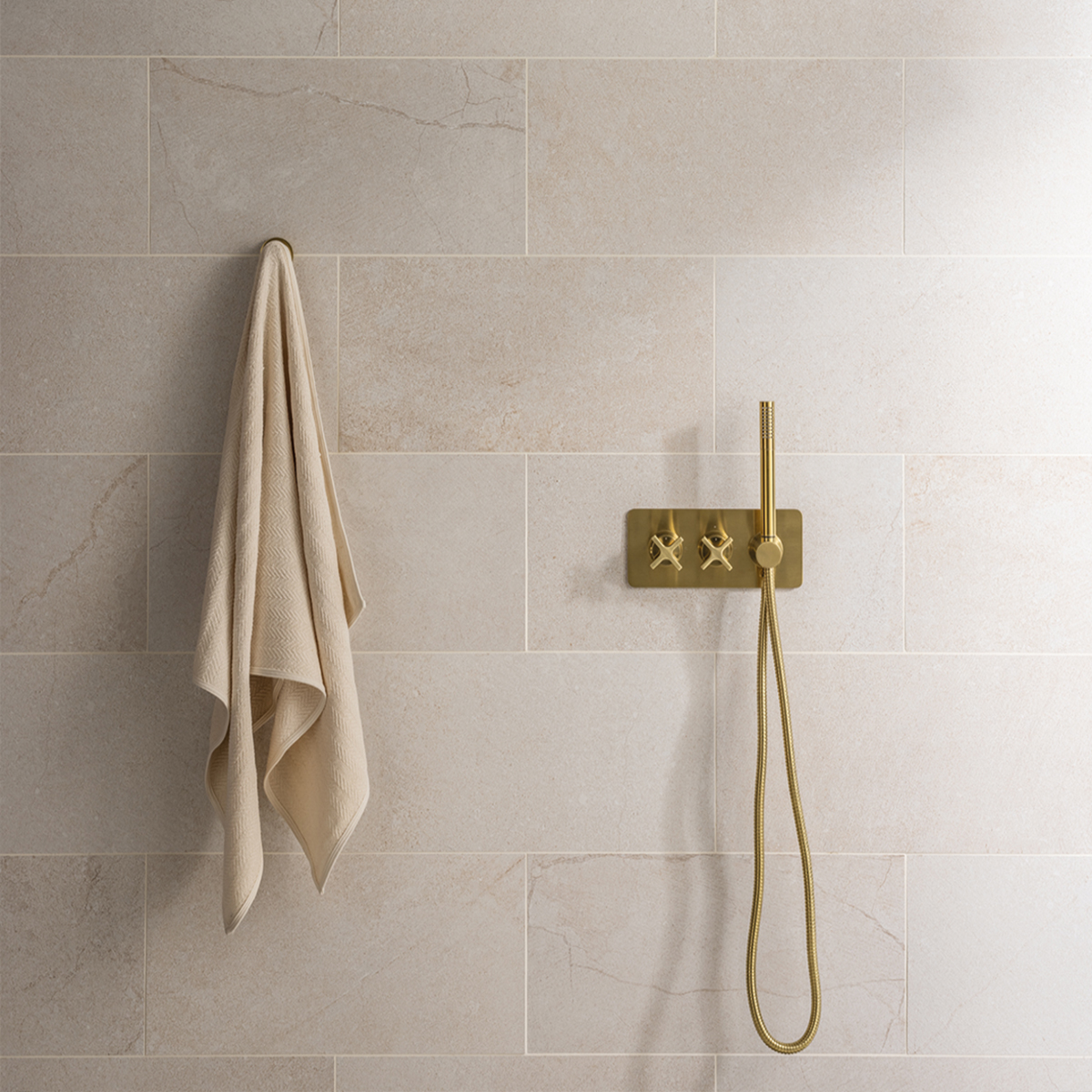
In a luxury showering space, the shower valve is the central control point of your daily routine. It is the architectural element you interact with most, dictating both the visual layout of the enclosure and the physical delivery of water. Choosing between a concealed configuration or an exposed setup is a foundational decision that impacts your spatial footprint, installation requirements, and the overall design language of the room.
Concealed Valves: The Minimalist Standard
Concealed shower valves represent the undisputed standard for premium contemporary architecture. By positioning the entire mechanical mixing valve and water pipework completely behind the finished wall tile, the visible footprint of the fixture is reduced to its absolute essentials.
The aesthetic advantage is immediate: only the highly refined faceplate, temperature controls, and flow selectors remain visible. This sleek presentation creates a calm, spa-like environment where the fittings appear integrated into the building fabric itself. From a maintenance perspective, it is a revelation. With the internal components hidden safely away, you have significantly less metallic surface area exposed to moisture, making daily cleaning exceptionally straightforward and eliminating typical limescale traps entirely.
Exposed Valves: The Refurbishment Alternative
In contrast, exposed shower valves sit entirely on the outside of the finished wall surface, featuring a visible horizontal bar valve connected to an external riser rail. While this look can be styled effectively within traditional, heritage-inspired schemes, its application in modern luxury design is generally driven by structural limitations.
If you are updating an existing bathroom layout without undertaking a complete remodel, opening up structural walls to run internal pipework can occasionally disrupt project schedules. An exposed configuration can offer a practical alternative in these scenarios because it connects directly to pre-existing pipe paths. However, this external footprint takes up physical space inside the enclosure, creates a heavier visual presence, and demands continuous maintenance to keep the external pipework and fittings free from watermarks and dust.
The Specification Reality: Outlets and Concealed Bodies
Because hidden controls offer unmatched visual superiority, modern high-end specifications focus almost exclusively on concealed layouts. Successfully executing this look requires matching your internal components directly to the number of water features you plan to run.
Every concealed configuration relies on a dedicated internal mechanism mounted securely inside your stud wall cavity during the first-fix plumbing phase. Crucially, these concealed bodies are entirely unique depending on your desired water outlets:
- Single-Outlet Configurations: Designed strictly to power a single water source, such as a standalone overhead fixed deluge or a single flexible handset.
- Multi-Outlet Diverter Systems: Engineered to channel water seamlessly between multiple features. A two-outlet valve allows you to toggle effortlessly between a primary overhead rainfall head and a secondary matching handset. Advanced three-outlet frameworks can integrate a third custom option, such as a localised waterfall flow or matching body jets.
Because these internal concealed bodies are precision-engineered to pair exclusively with their respective visible faceplates, ensuring you select the correct configuration on your plan is paramount. Be sure to check the “Related Products” section on our product pages to align your chosen design collection with its exact matching concealed body before your build team seals the walls.
Project Planning Summary Checklist
To ensure a flawless integration of hidden controls, confirm these essential parameters with your architect or contractor:
- Check Your Wall Cavity Depth: Concealed bodies require a specific minimum depth inside the stud wall to sit securely. Verify this clearance with your installer before finalising your layout.
- Map Outlets Prior to First-Fix: Commit to your showering configuration early. You cannot add an extra handset or bath filler down the line once the internal body is plumbed and the plasterboard is sealed.
- Prioritise Accessibility: Premium concealed systems feature smart internal cartridges that can be serviced or replaced directly from the front simply by removing the faceplate, ensuring your decorative tiling never needs to be disrupted during future maintenance.