
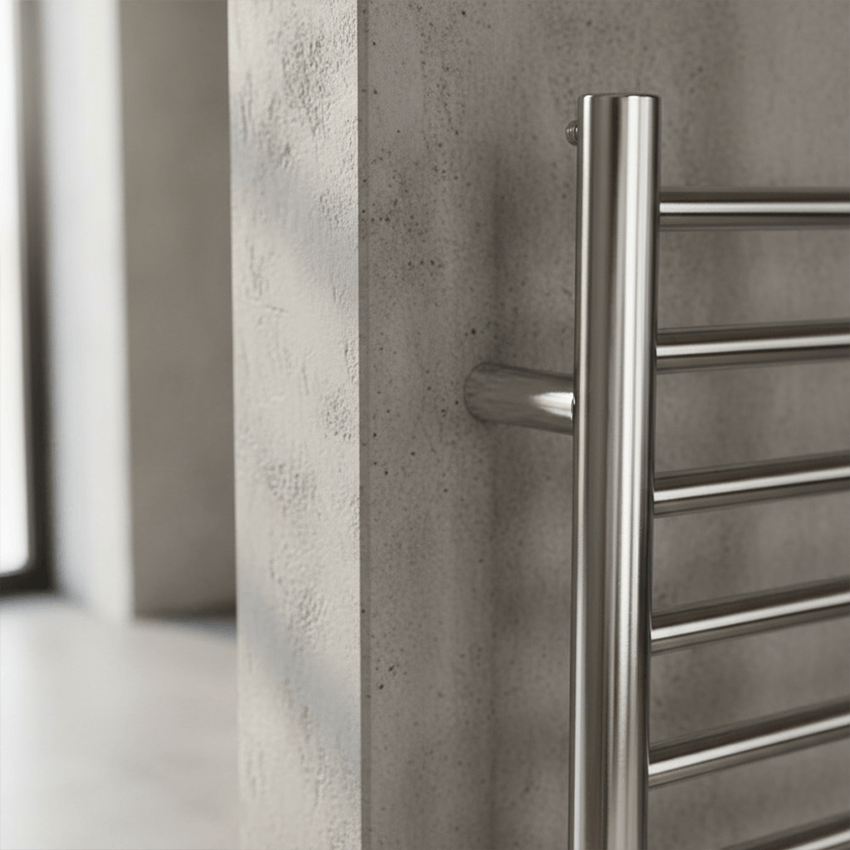
Even the most advanced central heating systems naturally accumulate trapped air over time. If your designer towel rail feels warm at the bottom but noticeably cold at the top, air has gathered inside the highest internal chambers. This trapped air prevents hot water from fully circulating, reducing the thermal output and forcing your boiler to work harder than necessary.
Bleeding a radiator is a simple, routine maintenance task that clears out these air pockets. It takes less than five minutes and restores your heating system to peak efficiency immediately.
Tools Required
- A standard radiator bleed key
- A clean, dry cloth or towel
- A small container to catch any water drops
Step-by-Step Maintenance Guide
1. Turn Off Your Heating
Never attempt to bleed a radiator while the central heating is actively running. Pumping water through the system will continually push more air into the radiator. Turn your heating off entirely and allow the radiators to cool down completely to prevent any risk of scalding from hot water.
2. Locate the Bleed Valve
On a designer towel rail, the bleed valve is typically located at the very top of one of the vertical upright bars. It looks like a small metal square set inside a round nut.
3. Protect Your Finishes
Place your small container directly beneath the valve and hold your cloth against the wall behind the radiator. This ensures that any discoloured heating water escaping the system does not stain your pristine tiles or grout lines.
4. Release the Trapped Air
Insert your radiator key into the square valve. Carefully turn the key counter-clockwise by a quarter or half turn. You will immediately hear a distinctive hissing sound as the trapped air is forced out by the water pressure below.
5. Close the Valve
Watch the valve closely. The moment the hissing stops and water begins to consistently drip or flow from the valve, all the trapped air has been successfully purged. Instantly turn the key clockwise to close and tighten the valve. Do not over-tighten, as this can strip the internal brass threads.
6. Check the Boiler Pressure
Bleeding multiple radiators will slightly lower the overall water pressure inside your central heating system. Check the pressure gauge on your main boiler. If it has dropped below the manufacturer recommended threshold, use the filling loop to top the water pressure back up.